
Choosing fin size is one of the most overlooked decisions in surfing. Most surfers grab a medium set and call it done — and medium fins are a fine default. But understanding how size affects your surfing gives you a real tool for tuning performance to your body, your board and the conditions.
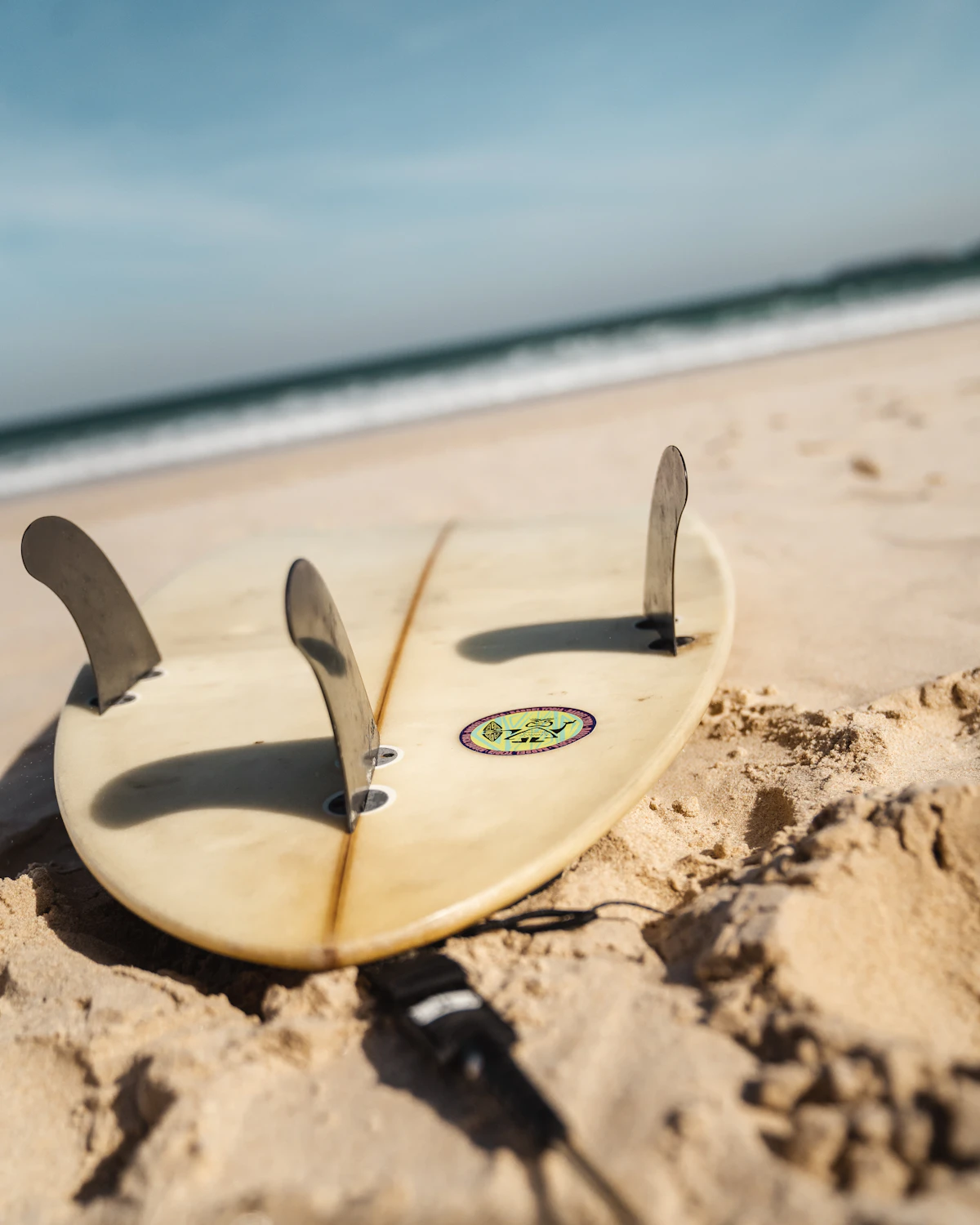
How Fin Size is Measured
Fin size refers primarily to height (also called depth) — the distance from the fin base to the tip. But height alone doesn't tell the whole story. Base length, rake (the sweep angle from vertical), and foil (cross-sectional shape) all interact with height to produce the overall feel of a fin.
For most purposes, when surf brands refer to small/medium/large, they're categorising by height and overall area. A medium fin is typically 14–16 cm high; small fins are 10–14 cm; large fins are 16–18 cm or more. The exact dimensions vary by manufacturer.
Small Fins
Small fins are shorter and have less area in the water. The key effects:
- More pivot, less hold — the board turns more quickly and loosely, with less resistance from the fin
- Less drive — less projection out of turns; you generate speed more from body movement than fin push
- Easier release — the tail can slide, which some surfers deliberately use for tricks and aerial manoeuvres
When small fins work well: powerful, steep waves where you don't need extra drive; lighter surfers who generate speed easily; experienced surfers who want more looseness and aerial ability; river surf setups where short fins avoid the riverbed.
Who should use small fins: surfers under 65–70 kg on high-performance shortboards in solid surf.

Medium Fins
Medium fins are the standard for a reason. They balance hold, drive and pivot well enough for most surfers in most conditions. If you're not sure what to use, medium is the right starting point.
- Balanced hold and release — enough grip for controlled turns, enough release for tighter pivots
- Good drive — projects well out of bottom turns, useful in a range of conditions
- Versatile across board types — works on shortboards, fish shapes and mid-lengths
When medium fins work well: almost any condition for the majority of surfers; beach break from waist to overhead; most board types.
Who should use medium fins: surfers roughly 65–90 kg on a standard shortboard or fish. The most common choice on the market for good reason.
Large Fins
Large fins have more area and create more resistance in the water. The effects are the opposite of small fins:
- More hold — the board stays connected through turns in bigger surf and doesn't slide out
- More drive — stronger projection from turns; large fins generate more speed through their own resistance
- Less pivot — the board turns on longer arcs; tight snaps become harder
When large fins work well: heavy surfers who would slide out of medium fins; bigger, more powerful waves where you need more grip; weak, mushy waves where large fins generate speed through resistance; longboards where drive and trim are more important than pivot.
Who should use large fins: surfers over 85–90 kg; anyone surfing powerful overhead-plus surf who is sliding out of medium fins; longboarders.

How Body Weight Influences Fin Size
Weight is the primary variable in fin sizing. Heavier surfers push harder against the fin during turns, which means they need a larger fin to generate the same hold a lighter surfer gets from a smaller one. Most fin manufacturers publish a recommended weight range for each fin model.
As a starting point:
- Under 65 kg — small or small-medium
- 65–80 kg — medium
- 80–90 kg — medium-large
- Over 90 kg — large
These are guides, not rules. Wave type, board volume and riding style all shift the ideal fin size. A 75 kg surfer who rides aggressively in solid surf might prefer small fins; the same surfer on a high-volume mid-length in soft waves might want large.
How Board Type Affects the Decision
High-performance shortboard: matches your weight range, lean toward smaller if you prefer looseness and rail-to-rail transitions.
Fish or twin fin: often runs smaller fins relative to body weight — the wide tail is already loose, and smaller side fins complement that flow.
Mid-length or step-up: stick to your weight range; consider larger if you're surfing the board in bigger, more powerful surf than usual.
Longboard: larger fins for drive and trim; single fin size is typically 7–10 inches, chosen based on board length and desired feel.
Condition Influence
Many experienced surfers size their fins to the conditions as much as to their body weight. In powerful overhead surf, smaller fins prevent the board from being locked in and allow snapping turns in the pocket. In weak, mushy waves, large fins generate speed the wave can't provide. This is the real value of removable fin systems — you can tune the board to match the day.